Alumni News
November 16, 2026
A Princetonian through and through: Alumni spotlight with alum Adam Lichtenstein (MFin *10)
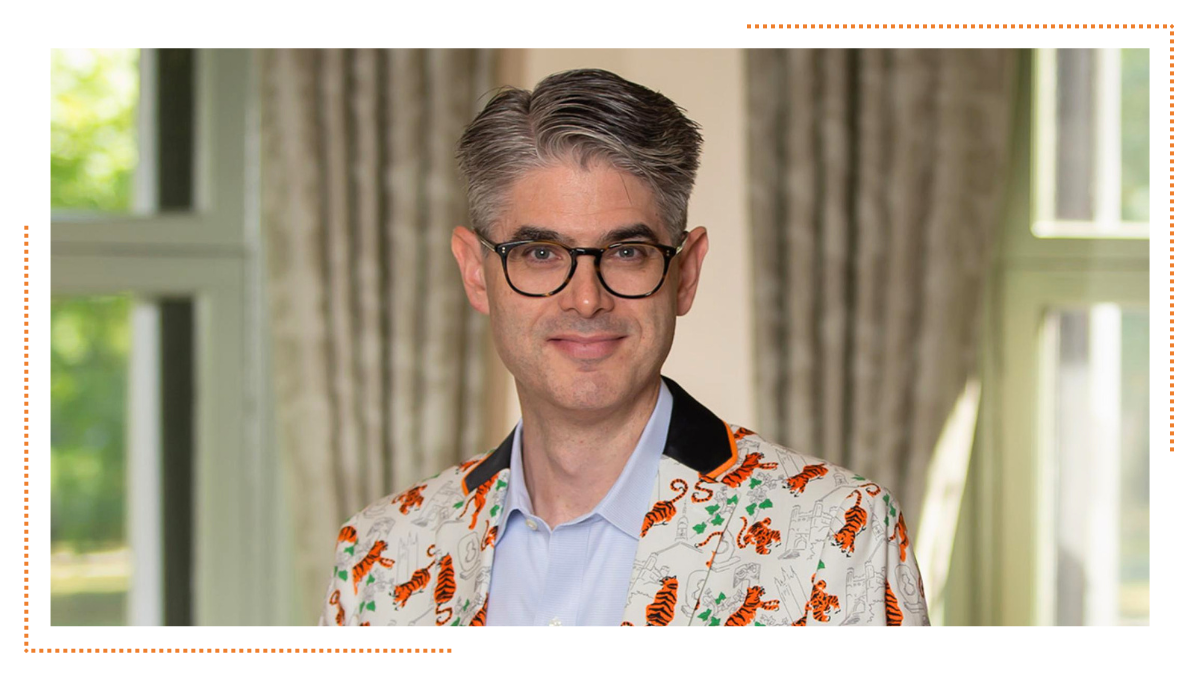
When Adam Lichtenstein graduated from Princeton University in 1995 with a degree in aerospace engineering, he knew he would always be a Princetonian, but he probably didn’t realize to what extent.
Since the aerospace landscape in the late 90s did not offer as many opportunities for young engineers as it does today, Lichtenstein brought his talents to the financial industry. He began his career as an analyst at the Gordian Group, a bankruptcy and restructuring advisory firm, before working his way up to Managing Director at Dresdner Kleinwort, the investment banking division of Germany’s Dresdner Bank. In 2004, Lichtenstein’s team spun out as the private equity firm Wall Street Technology Partners, where he worked until 2008, when he returned to Princeton to pursue his Master in Finance (MFin) degree at the Bendheim Center for Finance (BCF).
The MFin program allowed Lichtenstein to lean into the quant side of finance and utilize his engineering background. After graduating in 2010, Lichtenstein worked as a researcher at Kepos Capital LP for ten years before taking a role at Citadel Securities as the Quantitative Research Lead. Today, Lichtenstein is the Managing Director of Quant Development at Blackstone.
In 2025, BCF invited Lichtenstein to join the Advisory Council, which guides the center’s mission, activities, and outcomes. The following spring, he brought his experience and skills to Princeton students as a visiting lecturer at BCF, teaching courses on private equity and venture capital, and will return next year.
David Engel, BCF’s Manager of Career Development and External Relations, recently reached out to Lichtenstein for his insight into the financial industry, the MFin program, mentorship, and more.
If you’re a Princeton BCF alum who’s reached a milestone in your career, we’d love to hear from you. Reach out to Engel (david.engel@princeton.edu) to stay in touch and share your story.
Engel: What prompted you to return to school to pursue the MFin degree, and how did you choose the Bendheim Center’s program?
Lichtenstein: When I graduated in 1995 with an MAE degree, the opportunities for an aerospace engineer were not what they are today. I sometimes wonder what my career trajectory would have looked like if SpaceX had been founded just a decade earlier! Instead, I pursued a career in finance, focusing on private equity and restructurings, but I always had the itch to either pursue academia or return to my engineering roots as a quant. When I was fortunate to have a small academic paper published on drivers of venture capital returns, I took that as a cue to apply for an MFin degree. Bendheim was the obvious best option for me because the program was highly technical, flexible in content, and part of an institution I cherished as an undergrad.
Engel: How has mentorship played a role in your career? What advice can you share for students or recent grads who are seeking mentorship as they start their finance career?
Lichtenstein: My closest mentors have been a core part of my career development, and they’re also why I have chosen to spend a considerable amount of time mentoring others. My first (and still current) professional mentor was one of the partners at my first job. She had a reputation for being extremely demanding of anyone who worked with her, so when I was assigned to work with her a few weeks into the job, I was understandably nervous. I thought I had completely blown it when, on our first business trip, I overslept and almost missed the flight. When I ran onto the plane just as the doors were closing, she and everyone else started cheering. It turns out, one of her pet peeves is arriving too early for a flight, so, in her mind, I aced the test. We became close friends after that event, and even after we both left the firm a few years later, she’s been part of every significant career decision I’ve made since. Creating a lasting connection with your mentor is one of the greatest gifts you can give yourself (but make the flight!).
Engel: Can you give us an overview of your role as the Managing Director at Blackstone and what your responsibilities entail?
Lichtenstein: I head Quant Development at Blackstone, which means that my team builds and manages systems for modeling portfolios and risk across many areas of the firm. Before Blackstone, I spent most of my quant career managing systematic macro portfolios, primarily in volatility or commodity assets. In 2022, I had the opportunity to join Blackstone and bring the tools and techniques many firms use in public markets and adapt them to private markets. While private markets are massive, applying quant and systematic strategies to them is still in its early stages.
Engel: How has the finance industry landscape changed during your career? What do you think will challenge the field most in the next decade, and how can students prepare?
Lichtenstein: The core principles of buy-side finance have not changed: generate the best risk-adjusted returns for your clients. How this is done and what markets are available change continuously. There is hardly a year that goes by that feels like a repeat of the previous one. Just a few years ago, I would advise any student not already in a technical degree to learn to code at least at a basic level. I felt coding was critical to long-term success in buy-side finance. Today, the rapid advance of AI has made that advice obsolete for all but a subset of students. Now the core qualities for success in finance, even for technical quants, are shifting towards softer skills like the ability to articulate and defend a position in a group, judge models and code (even without writing it yourself), and understand a broad range of financial topics.
Engel: As a new member of Princeton BCF’s Advisory Council, how do you hope to guide the program?
Lichtenstein: BCF has had enormous success because of both the quality of the students the program has attracted and the experience of the faculty teaching them. Continued success, however, will require evolving to meet students’ changing requirements and desires. I have the good fortune to interact with both recent graduates as new analysts at Blackstone and as students in my class ECO 461/FIN 581 (Entrepreneurial Finance: Private Equity and Venture Capital) in the Spring. I have told my students and have shared with the BCF Advisory Council that careers in quant finance are in no way eliminated by AI, but anytime there is such a systemic explosion in productivity, you have to be nimble, and sometimes a bit humble, to navigate the changing landscape.